Are mother-of-pearl spoons suitable for everyday use?

Mother-of-pearl spoons look elegant, feel light and are considered a classic for caviar, salt or fine desserts. But as soon as they are used for more than display, a practical question arises: can they really cope with normal everyday life in the kitchen?
The short answer is: Yes, but only to a limited extent. For certain foods, mother-of-pearl spoons are excellent. For the dishwasher, hot stirring, hard foods or busy family kitchens, they are less suitable. If you use and care for them properly, you will enjoy them for a long time. If you treat them like stainless steel, you will quickly risk scratches, dull patches or breakage.
What makes mother-of-pearl spoons special
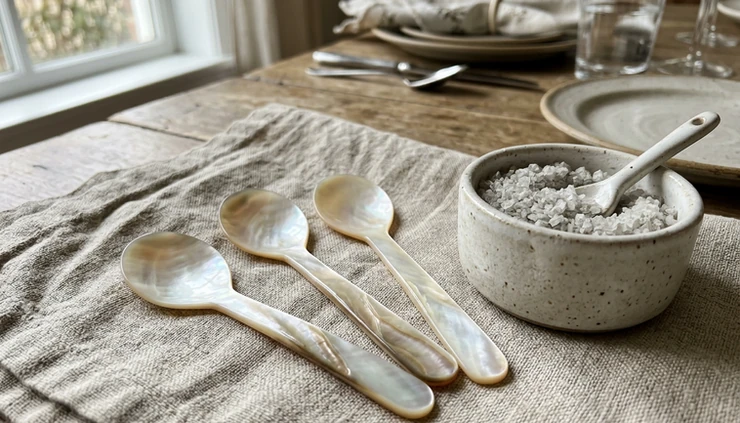
Mother of pearl, also known as nacre, is a natural material from the inner layer of certain shells. Depending on the light, it shimmers in white, cream, pink or grey. It is exactly this sheen that makes it so appealing.
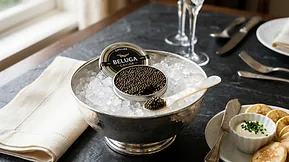
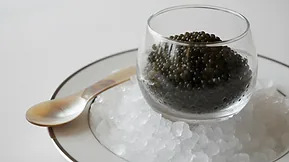
In the kitchen, mother of pearl has another advantage: it does not react with delicate foods the way some metals do. That is why mother-of-pearl spoons are traditionally used for caviar. The taste is meant to stay neutral, whereas metal cutlery can be perceived as disruptive with very fine products.
At the same time, mother of pearl is not an indestructible kitchen material. It is harder than it looks, but more brittle than stainless steel. The surface can scratch, chip when knocked and lose its shine through incorrect cleaning.
Rule of thumb: Mother-of-pearl spoons are cutlery for enjoyment, not a kitchen tool.
The ranking shows what mother-of-pearl spoons are good for in everyday life
The question "Are mother-of-pearl spoons suitable for everyday use?" is best answered through concrete everyday situations. This ranking orders the uses from highly recommended to unsuitable.
Rank | Everyday use | Suitability |
1 | Caviar, salt, spices, fine pastes | Very good |
2 | Desserts, yoghurt, jam, honey | Good |
3 | Tea, coffee, cold drinks | Suitable with limits |
4 | Cooking, stirring in hot pots | Hardly suitable |
5 | Dishwasher, hard foods, children's cutlery | Not suitable |
Number 1 for caviar, salt and fine ingredients
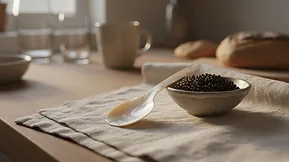
This is where the mother-of-pearl spoon plays its strongest role. With caviar, fleur de sel, spice blends or fine spreads, it not only looks high-quality, it is also practical. The smooth surface hardly absorbs odours and has no noticeable effect on taste.
For this use, mother of pearl is particularly worthwhile. The spoon is used briefly, then cleaned by hand, and stays beautiful.
Number 2 for desserts and breakfast
Mother of pearl is well suited to soft foods. These include:
Yoghurt
Pudding
Creams
Jam
Honey
soft fruit compotes
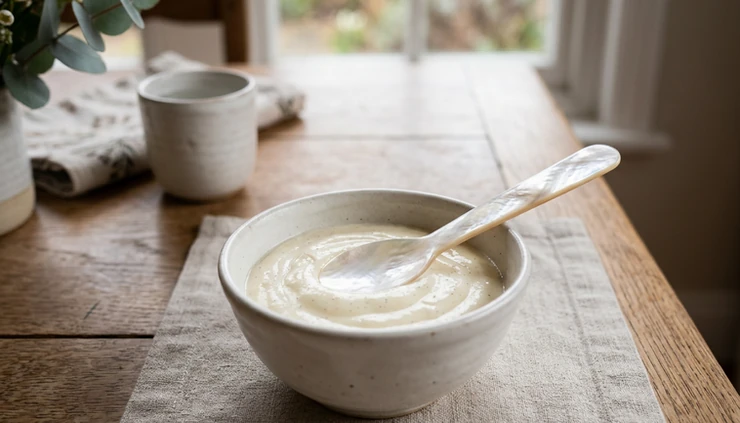
So a mother-of-pearl spoon can work at breakfast every day if you use it mindfully. But it should not be left standing in the jar, should not lie in very acidic food and should not end up in the sink with other cutlery.
Number 3 for drinks, with limits
Many people like to use small mother-of-pearl spoons for tea or coffee. It looks good, but technically it is only recommended to a limited extent. Very hot liquids and frequent stirring can strain the material over time.
Brief use is usually not a problem. But it is better not to use mother of pearl as your standard spoon for boiling-hot tea. It is better suited to iced tea, cold milk drinks or cocktails with gentle ingredients.
Number 4 for cooking and hot food
A mother-of-pearl spoon does not belong in cooking. It is out of place in hot pots, pans or sauces. Vigorous stirring, scraping or tasting straight from the pot can also damage the material.
Here, wood, silicone or stainless steel are clearly superior. Mother of pearl is beautiful at the table, but weak at the stove.
Number 5 for the dishwasher and rough use
The dishwasher is the greatest enemy of many natural materials. Hot water, harsh detergents and prolonged moisture can make mother of pearl dull. Rattling against other cutlery can also damage the edges.
Mother of pearl is also not ideal for:
hard nuts or candied peel
solid ice cream straight from the freezer
chaotic cutlery drawers
picnics without a protective case
small children who drop cutlery
Pros and cons at a glance
Pros
Elegant look, light weight, pleasant mouthfeel, taste-neutral with fine foods, ideal for a special dining culture
Cons
Not dishwasher-safe, sensitive to knocks, not suitable for cooking, needs hand care, usually more expensive than simple spoons
So in everyday life, mother of pearl does not win through toughness, but through atmosphere. A mother-of-pearl spoon makes simple things finer: a small dish of salt, a dessert glass, a Sunday breakfast, a little bowl of honey.
If you put every spoon in the dishwasher every day, you should stick to stainless steel. If you serve mindfully and handle delicate materials with care, you can use mother of pearl regularly.
The right care determines how long they last
With good care, mother-of-pearl spoons stay beautiful for a long time. The rules are simple, but important.
Wash by hand.
Lukewarm water and a mild washing-up liquid are enough. Then rinse briefly and dry straight away.
Do not soak.
Mother of pearl should not lie in water for long. This applies especially to washing-up water with detergent or to acidic food remains.
Store softly.
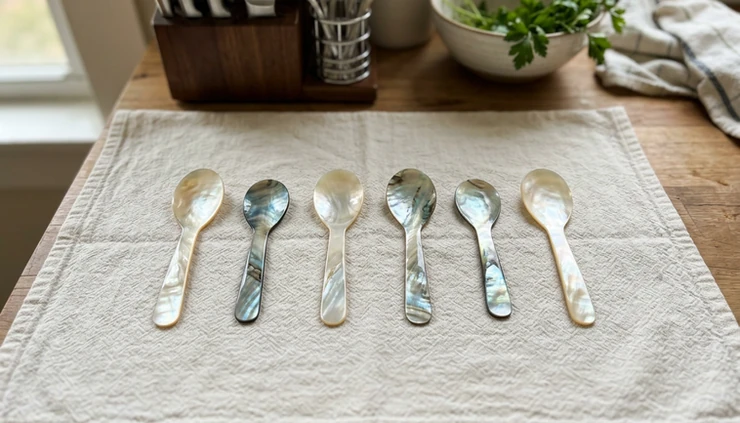
A fabric pouch, a cutlery compartment with space or a small box protects against scratches. Loose between knives and forks, the spoons quickly become dull.
Do not use abrasives.
Rough sponges, scouring powder or harsh cleaners attack the surface. A soft cloth is the better choice.
Do not let acid act for long.
Lemon, vinegar and very acidic fruit preparations should not dry on. Better to clean soon after eating.
Who is a mother-of-pearl spoon worth it for?
Mother-of-pearl spoons are worth it above all for people who appreciate fine dining culture and like special materials. They suit calm moments of indulgence, small serving bowls and high-quality ingredients. They are also popular as gifts, because they are both practical and decorative.
They make less sense if everything in the household has to be as low-maintenance as possible. In a kitchen where cutlery goes straight into the dishwasher after a meal, mother of pearl quickly becomes an annoying exception.
The best approach is a middle way: see mother-of-pearl spoons not as a replacement for everyday cutlery, but as an addition. Then they serve their purpose very well.
The verdict on everyday use
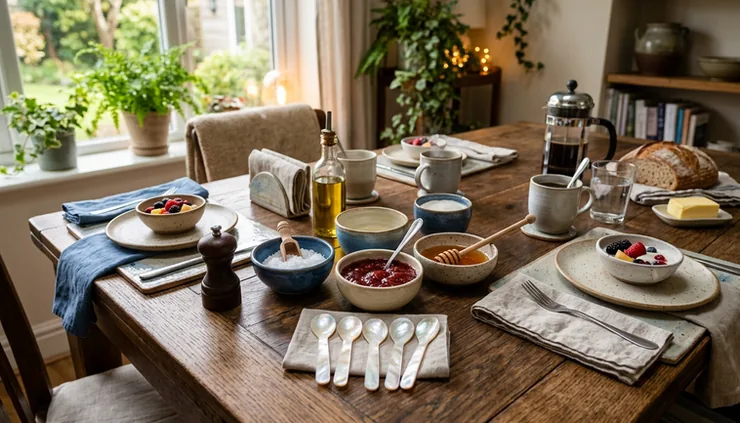
Mother-of-pearl spoons are suitable for everyday use if "everyday" means gentle use: eating dessert, taking honey, measuring salt or serving special ingredients. They are not suitable if they have to cope with heat, pressure, the dishwasher and tough kitchen routines every day.
In the ranking, they therefore come out as a very good choice for fine foods, as a good choice for mindful moments of indulgence and as a poor choice for rough kitchen work.
The best decision is: keep a few mother-of-pearl spoons ready for special and soft foods, and use stainless steel for normal kitchen duty. That way mother of pearl stays what it does best: a small, beautiful detail that noticeably enhances the table.
Find out more about our handmade Spoons Made of Genuine Mother of Pearl on our home page.