Why Professionals Serve Caviar Only with Mother-of-Pearl Spoons

Caviar forgives very little. The eggs are delicate, salty, nutty, sometimes slightly buttery or briny. Even a small foreign taste can be enough to make the fine notes seem dull. That is exactly why professionals almost always reach for mother of pearl when serving.
The mother-of-pearl spoon is not a luxury gimmick, nor is it mere table decoration. There is a practical reason for it: it hardly affects the taste. With a product that is often eaten in very small amounts and where every nuance counts, that is crucial.
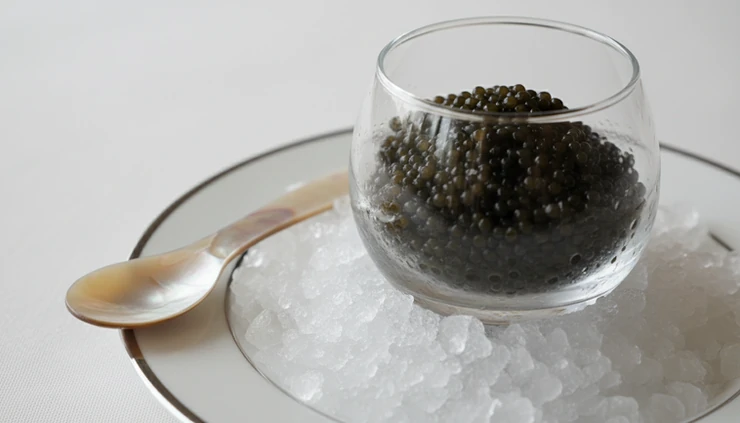
Mother of pearl is neutral in taste
Mother of pearl, also known as nacre, consists of natural pearly layers from shells. It feels smooth, is hard enough for service and above all has one important property: it does not taste of metal.
That sounds trivial, but with caviar it matters a great deal. Good caviar lives from fine differences:
a clean note of the sea
a creamy mouthfeel
a short, salty opening
a long, nutty finish
fresh aromas that are never bitter
A spoon made of mother of pearl stays quietly in the background. It carries the caviar to the mouth without drawing attention to itself. That is exactly what makes it so popular in restaurants and at tastings.
Why Professionals Serve Caviar Only with Mother-of-Pearl Spoonsis therefore easy to explain: the spoon should add nothing. It should only carry.
Metal can change the delicate taste
Many people know the effect of metal cutlery on delicate foods. Yoghurt from a silver spoon, a soft-boiled egg from an old metal spoon or an acidic dessert can suddenly taste slightly metallic. With caviar, this is even more noticeable, because the portion is small and the aroma reaches the palate in concentrated form.
Not every metal reacts in the same way. In everyday life, stainless steel is fairly neutral and much less problematic than silver or reactive metals. Even so, professionals consistently avoid metal with caviar. The reason is less a fear of a chemical reaction than a simple quality principle: if a material could even potentially interfere, you use a better-suited one.
Caviar contains salt and delicate fats. On top of that come natural aromas that are quickly masked. A metallic tone, even a faint one, can distort the impression. Instead of creamy, fresh and clean, the caviar then tastes flatter or slightly bitter.
Mother of pearl is therefore considered a safe choice. It does not react noticeably with the product and does not change how it is perceived. With high-quality varieties, this is not a detail but part of serving correctly.
The spoon also protects the texture
Caviar is not only about aroma. Texture is just as important. The eggs should stay separate, roll lightly on the tongue and then gently burst. If caviar is handled roughly, it quickly loses its appeal.
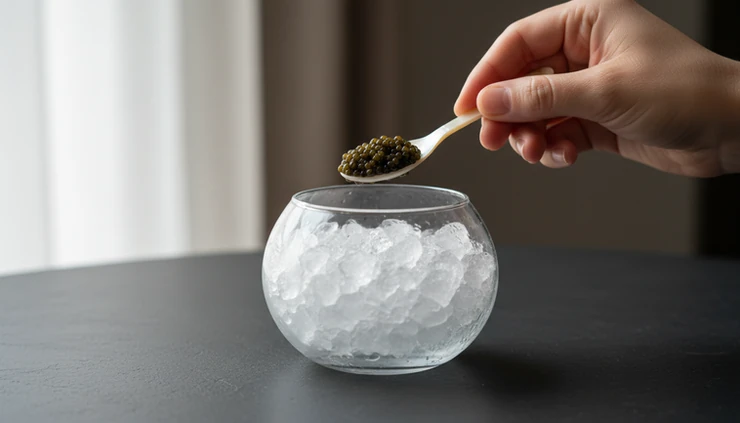
Mother-of-pearl spoons usually have a smooth, gently rounded surface. They glide easily through the eggs without crushing them unnecessarily. This is especially important when portioning from the tin or bowl.
Good service pays attention to three things:
Do not press
Caviar is lifted, not scraped.
Do not stir
Strong movement can damage the eggs.
Do not let it get warm
Caviar is best kept chilled, but not frozen.
Mother of pearl is a good fit here, too. It feels pleasantly cool and has no heavy edges that damage the eggs. Of course, a lot depends on how the spoon is made. A poorly ground mother-of-pearl spoon would not be a good choice. A cleanly polished piece, on the other hand, is ideal.
Tradition plays a part, but it is not the main reason
Mother-of-pearl spoons look elegant. That suits caviar, but the visual effect alone does not explain the tradition. In fine kitchens, little survives purely for its looks if it harms the taste.
The custom arose from practical experience. Anyone who tastes caviar repeatedly soon notices which materials stay neutral and which change the impression. Mother of pearl prevailed because it works. Added to that was its elegant appearance. The light shimmer forms a beautiful contrast to the dark caviar without being obtrusive.
So the spoon has two jobs:
It preserves the aroma.
It makes the service calmer and more refined.
The ritual also helps you eat mindfully. Caviar is rarely served in large quantities. A small spoon, a clear portion and a neutral carrier direct attention to what matters.
Which alternatives also work
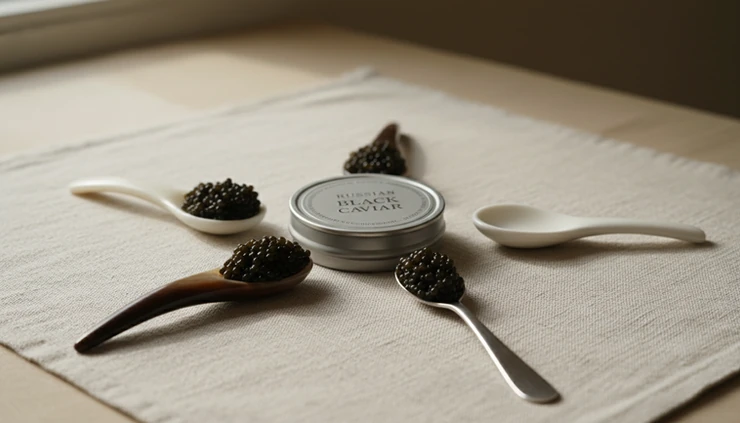
Mother of pearl is the classic, but not the only possible solution. What always matters is that the material is taste-neutral, smooth and clean .
These are often well suited:
Glass
Porcelain
Ceramic
Horn
Bone, if processed hygienically
Materials that can absorb or give off odours are less ideal. Wood looks natural, but can retain aromas. A wooden spoon that has already been in contact with spices, oil or other food does not suit fine caviar.
Metal should be avoided, especially silver. Even if a clean stainless steel spoon does not ruin everything at once, it is not the best choice for mindful caviar enjoyment. If you serve caviar at home and do not own a mother-of-pearl spoon, a small porcelain or glass spoon is the better option.
How to serve caviar correctly
The spoon is only one part of the whole. Temperature, accompaniments and timing also influence the taste.
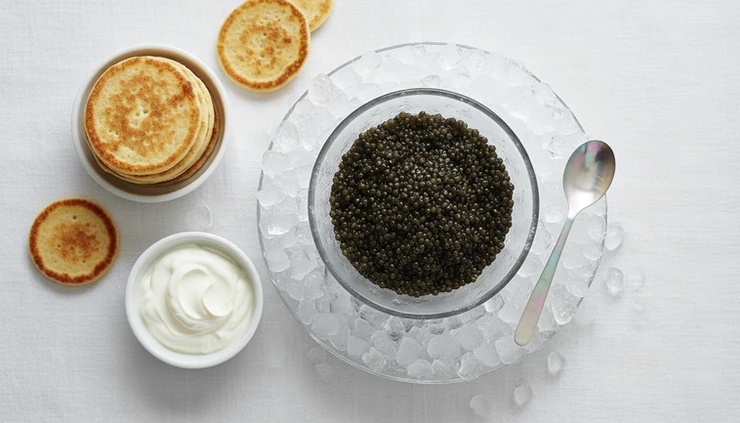
Caviar should come to the table well chilled. Many people serve the tin or bowl on ice. No meltwater should get into the caviar. It should stay cold, but not taste ice-cold, because too much cold dampens the aromas.
With accompaniments, restraint is the rule. Blini, lightly buttered toast or small potatoes go well as long as they stay mild. Crème fraîche can work, but should not dominate. Onions, lemon or very strong ingredients quickly mask exactly what you buy caviar for.
For a simple tasting, this is often enough:
chilled caviar
a mother-of-pearl spoon
a neutral base such as blini or toast
a quiet moment
Tasting caviar straight from the spoon is also common. That shows the pure taste most clearly. If you are comparing several varieties, start with the mildest and work your way up to stronger flavours.
The little spoon makes a big difference
A mother-of-pearl spoon looks inconspicuous, but it fulfils a clear task. It protects the delicate taste, treats the eggs gently and suits the calm character of a good caviar tasting.
Serving caviar does not have to become a complicated ceremony. The most important rule is simple: anything that could disturb the taste stays away. Mother of pearl meets this rule particularly well. That is why professionals use it, and why the little spoon is worth it at home too, as soon as caviar is meant to be more than a quick taste.
Find out more about our handmade Spoons Made of Genuine Mother of Pearl on our home page.