Why Metal Changes the Taste of Caviar, and Mother of Pearl Does Not

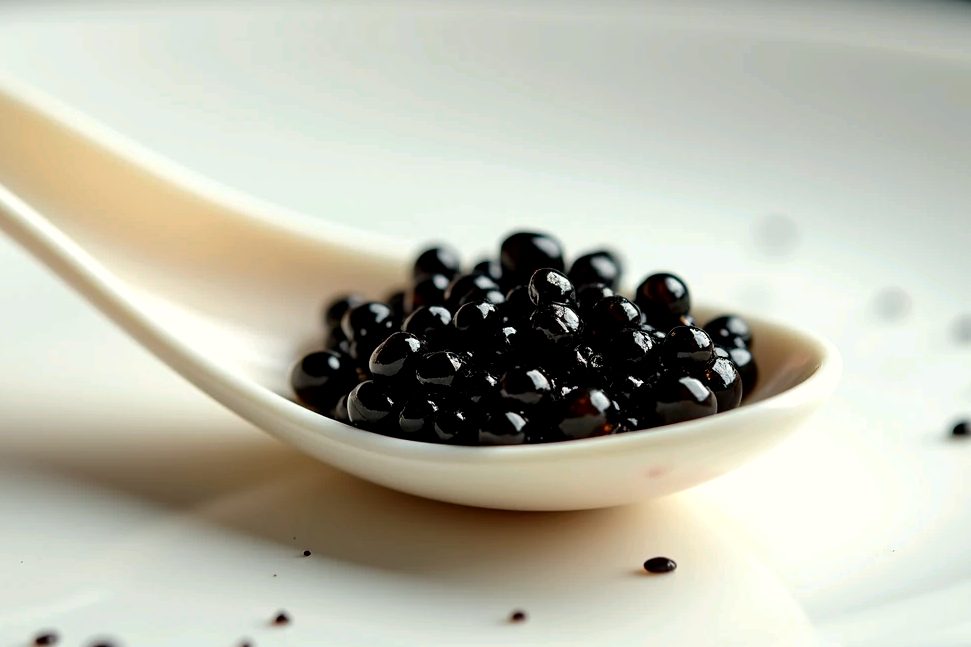
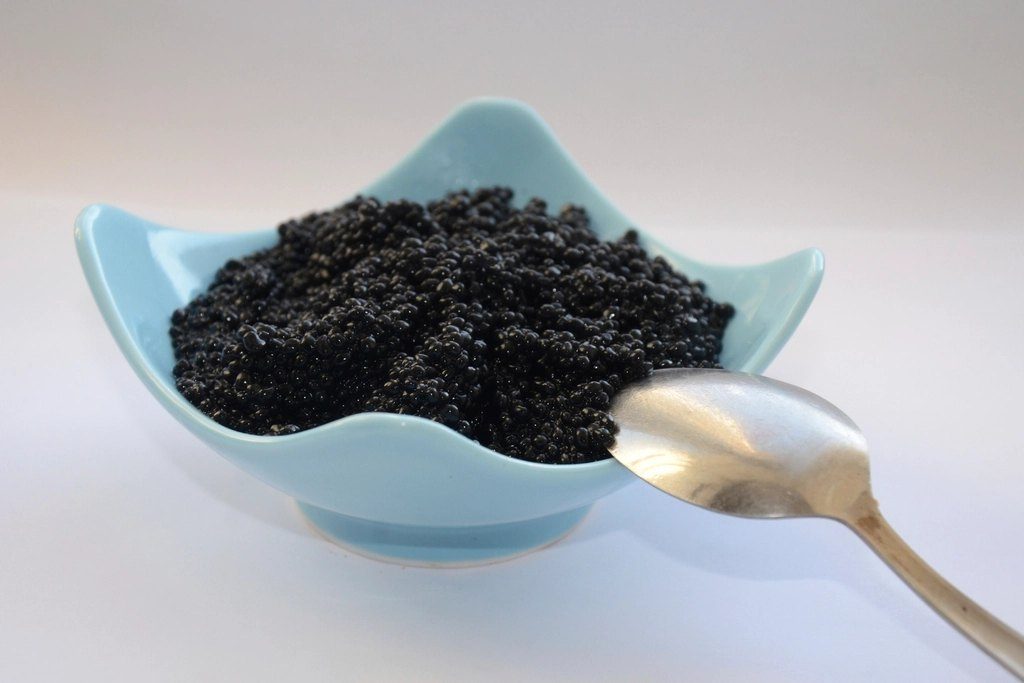
If you have ever eaten good caviar from a silver spoon, you may know this moment: the first impression is salty and nutty, but then a slightly metallic, almost tinny note pushes its way in. Many people blame the caviar. Usually, though, it is the spoon. In this article we look at what happens chemically, why mother of pearl behaves so differently and how you can check the difference for yourself at home.
If you would like a short overview first, you will find it in our article Why a mother-of-pearl spoon does not alter the taste of caviar. Here we go one step deeper.
What makes caviar so delicate
Caviar is a natural product with a remarkably fine composition. Each egg consists of a thin membrane, water, protein and a high proportion of fat, including many unsaturated fatty acids. Then there is the salt used to preserve the roe. It is exactly this mixture that creates the flavour: creamy, slightly nutty, with a clear note of the sea.
But the same mixture also makes caviar vulnerable. Unsaturated fats react easily with oxygen, and salt water is a good medium for chemical reactions on surfaces. As soon as a reactive material comes into play, the taste experience changes within seconds.
What happens on contact with metal
The metallic aftertaste does not have just one cause. Several processes work together, and their strength depends on the metal.
1. Metal ions dissolve
Tiny amounts of metal ions dissolve from every metal surface, especially in a salty, moist environment. Our tongue is very sensitive to such ions. Many people know this from biting on tin foil or from the taste of a coin. On a caviar spoon, the same thing happens on a small scale: the brine between the eggs acts as an electrolyte, and the spoon releases traces of its material.
2. Silver and sulphur
Silver is the classic example. It reacts with sulphur compounds that occur naturally in protein and forms silver sulphide. This is the same dark film that makes silver cutlery tarnish over time, and that you may know from silver spoons used to eat eggs. With caviar, this creates a slightly sulphurous, unclean impression on top of the metallic one.
3. Metals speed up fat oxidation
Less well known, but decisive for flavour: certain metal ions, above all iron and copper, act as catalysts for the oxidation of fats. This produces breakdown products that we perceive as metallic, fishy or rancid even in the smallest amounts. With a food as rich in fat as caviar, this is particularly noticeable. The fine, buttery note tips over and the flavour seems flat.
4. Temperature and heat conduction
Metal conducts heat very well. A spoon that has been lying in a warm hand or comes straight out of the drawer passes this warmth directly to the delicate eggs. Caviar tastes best well chilled. A warm spoon changes the texture and makes the flavours turn faster.
Why mother of pearl stays neutral
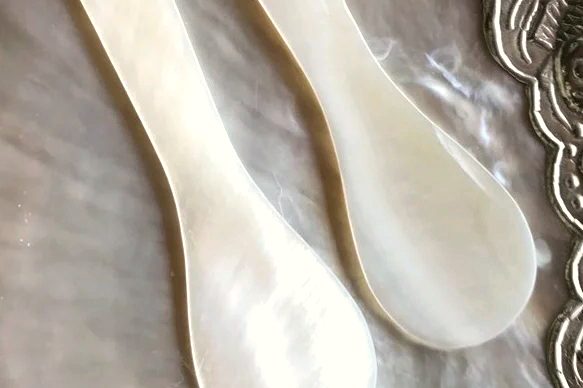
Mother of pearl is the shimmering material that shellfish form on the inside of their shells. It consists of around 95 per cent aragonite, a form of calcium carbonate, and a small share of organic material that holds the tiny lime platelets together like mortar. For enjoying caviar, this structure has several advantages:
No metal ions: mother of pearl contains no metal that could dissolve and become noticeable on the tongue.
No reaction with sulphur: unlike silver, mother of pearl does not tarnish or form a film.
No catalyst for fat oxidation: calcium carbonate does not speed up the breakdown of the delicate fats.
Low heat conduction: mother of pearl feels cool and passes hardly any warmth to the caviar.
Smooth surface: the eggs glide gently off the spoon without bursting.
On the palate, mother of pearl is simply neutral. You taste the caviar, not the cutlery.
Materials compared
Not every metal has the same effect, and besides mother of pearl there are other neutral materials. The following overview summarises the most important differences:
| Material | Reacts with caviar? | Taste | Note |
|---|---|---|---|
| Silver / silver-plated | Yes, clearly | metallic, slightly sulphurous | tarnishes, the classic mistake |
| Stainless steel | Slightly | slightly metallic to a fine palate | robust, but not ideal |
| aluminium | Yes | clearly metallic | unsuitable |
| Gold | Practically not | neutral | very expensive, rare |
| Mother of pearl | No | neutral | the classic of caviar culture |
| Horn, bone, wood | No | neutral | wood can absorb odours |
| Glass, porcelain | No | neutral | better as a bowl than a spoon |
Gold, by the way, is the reason why gilded caviar spoons were once found at some royal courts. It hardly reacts, but it is costly and soft. That is why mother of pearl became the elegant and affordable standard. You can read more about the direct comparison in Mother-of-pearl vs metal spoons.
The test at home
You do not have to take our word for it. With a small comparison you can taste the difference yourself:
Take a small amount of caviar, well chilled, straight from the tin.
Set out two spoons: one made of silver or stainless steel and one made of mother of pearl.
Drink a sip of still water first to neutralise your palate.
Taste from the mother-of-pearl spoon first, then from the metal spoon. Each time, press the eggs gently against your palate.
Pay attention to the finish: does it stay nutty and round, or does a tinny note join in?
Most people notice the difference with the silver spoon immediately, and with stainless steel more in the aftertaste. If you serve a particularly fine caviar, you will soon come to appreciate the neutrality of mother of pearl.
Tip: Chill the spoon as well. Lay it on the ice next to the caviar tin for a few minutes, but not directly in iced water.
What else to bear in mind
The best spoon is of little use if the caviar has already touched metal beforehand. So pay attention to a few small things:
Serve caviar in its original tin on ice, or in a bowl made of glass, porcelain or mother of pearl.
Do not use metal knives to spread it on blinis.
Open the tin just before serving and finish the contents promptly.
After eating, simply rinse the mother-of-pearl spoon in lukewarm water and dry it gently.
The last point in particular ensures that your spoon stays as neutral for many years as it was on the first day. Avoid acidic cleaners and the dishwasher, because calcium carbonate is sensitive to acids.
Conclusion
The metallic aftertaste with caviar is not a myth, it is chemistry: metal ions, the reaction of silver with sulphur and the accelerated oxidation of delicate fats noticeably change the flavour. Mother of pearl has none of these properties. It is mineral, unreactive and pleasantly cool. That is why it has been the material of choice for generations whenever caviar should taste the way it was meant to.
Taste the difference for yourself: our handmade mother-of-pearl spoons, in a set of four, bring the pure flavour of your caviar to the table.
Discover mother-of-pearl spoons